

Hebrew title: אנתולוגיה לשירה מקורית” – א”
Hebrew-in-English title: “Antologiyah Le-Shirah Meḳorit” – Alef
English title: “Anthology of Original Poetry” – A
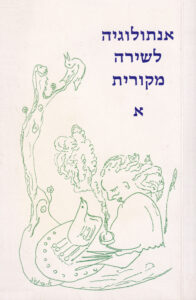
| Details: | |
|
|
Hebrew title: אנתולוגית משוררי עם” – ג – שירים”
Hebrew-in-English title: “Antologiyat Meshorere Am” – Gimel – Shirim
English title: “Anthology of Folk Poets” – C – Poems
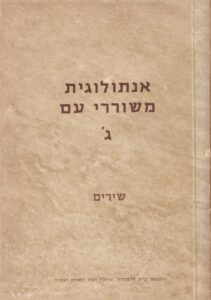
| Details: | |
|
|
The entire cover – “Anthology of Original Poetry” (Vol. A):
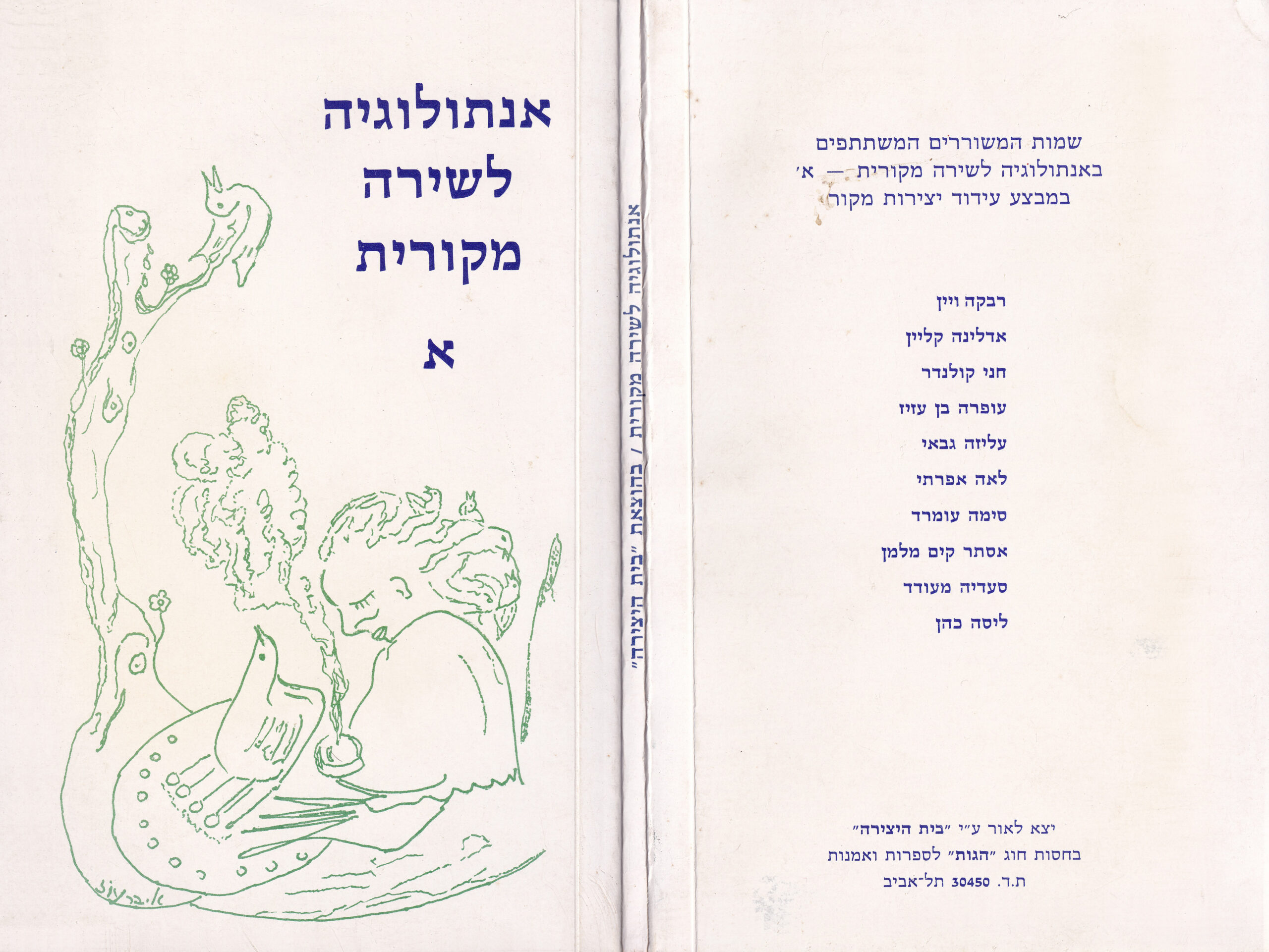
Basic description (Google based):
- The Release: “Anthology for Original Poetry” (Volume A) is a curated collection of modern Hebrew poetry compiled and edited by the Israeli poet, painter, and editor Avraham Bar-Oz. This specific volume was published in the Hebrew calendar year 5753 (תשנ”ג), corresponding to 1992/1993, by the Beit HaYetzira publishing house (often in collaboration with the “Hagut” and “Traklin” imprints).
- The Content: The anthology serves as a literary platform showcasing original, modern Hebrew poems from a diverse array of contemporary Israeli poets. It highlights varying themes ranging from personal identity, love, and silence to national symbols like Jerusalem.
The entire cover – “Anthology of Folk Poets” (Vol. C):
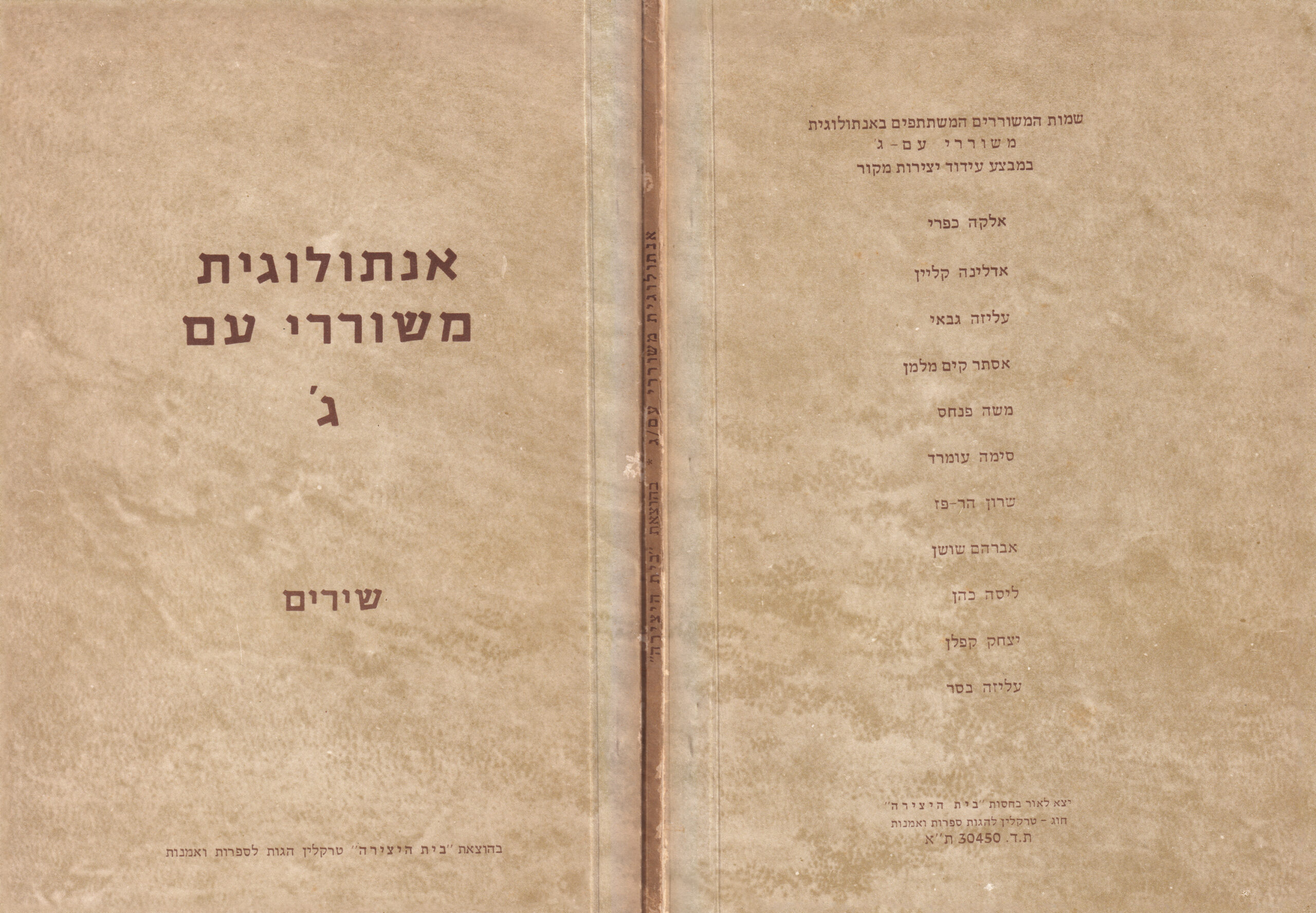
Basic description (Google based):
- The Release: “Anthology of Folk Poets” (Volume C) is a well-known, multi-volume poetry series edited by the Israeli poet and author Avraham Bar-Oz compromised by three main volumes published in the Hebrew calendar year 5740-5742 (תש”ם–תשמ”א/תשמ”ב), corresponding to 1980–1982, and an additional volume (fourth) published in 5746 (תשמ”ו), corresponding to 1986. Volume C (Volume 3) was published in 5742 (תשמ”ב), corresponding to 1982, by the Beit HaYetzira publishing house (often in collaboration with the “Hagut” and “Traklin” imprints).
- The Content: This anthology, first published in 1980, is part of a broader series of anthologies and collections of Hebrew poetry edited by Bar-Oz. It features works of Hebrew poetry that reflect a more populist, accessible, or communal voice—often capturing the spirit of the people, hence the term “Meshorere Am” (People’s Poets). The anthology aimed to give voice to a broad, inclusive spectrum of Israeli writers—from seasoned poets to emerging talents. It spans numerous genres, themes, and voices across the modern Hebrew literary landscape. Because it gathers works from a wide array of authors, the content of Volume C is an eclectic mix of contemporary Israeli poetry rather than a single thematic narrative (I want to correct the I strongly belief that GOOGLE translation of “People’s Poets” is incorrect and should be what I wrote as “Folk Poets”).
General information (GOOGLE based):
-
- The Editor: Avraham Bar-Oz (1933–2020) was a prominent figure in managing community anthologies, seeking to elevate both established voices and lesser-known local Israeli writers.
- The Series: These books are part of a broader ongoing project. Bar-Oz edited multiple anthologies throughout the 1980s and 1990s, with each volume functioning as a time capsule for Israeli poetry during that specific era.
- The Content: Spanning the 1980s and 1990s, the complete collection of both series represents a monumental, democratic literary initiative curated by Avraham Bar-Oz. Designed to bypass elite literary gatekeepers, the anthologies provided an egalitarian platform that placed emerging, everyday writers side-by-side with more established voices.
Collectively, these volumes serve as a vast cultural mosaic of the Israeli zeitgeist during that era. The thematic scope is remarkably broad, capturing the duality of Israeli life: heavy collective national experiences—such as wartime trauma, the legacy of the Holocaust, the pursuit of peace, and homages to Jerusalem—are interwoven with intimate reflections on romance, family, aging, and personal identity. By amplifying authentic, grassroots voices, the complete series stands as a comprehensive historical archive of the modern Hebrew emotional landscape, giving a definitive voice to the “everyday poet” of Israel.
Editor (short biography):
Early Life and Heritage
Avraham Bar-Oz (born Avraham Taizi; September 30, 1933 – August 5, 2020) was a prominent Israeli poet, painter, and literary editor. Born in Tel Aviv to Menachem and Hannah Taizi, his family lineage traced back to the revered 17th-century Yemenite Jewish poet and Kabbalist, Shalom Shabazi. In his youth, Bar-Oz was immersed in religious and nationalist pioneer movements, including Bnei Akiva and Beitar, and studied at the “Keter Torah” Yeshiva. Before the establishment of the State of Israel, he served as a fighter in the youth battalion of the Irgun (Etzel) underground movement.
Literary and Artistic Career
Bar-Oz established himself as a central figure in modern Hebrew literature, eventually becoming a member of the Hebrew Writers Association and ACUM. His poetry was deeply musical and emotionally resonant, leading to several of his works being adapted into popular music. Most notably, his poem “Na’ama” achieved national fame when it was composed into a song and performed by Esther Ofarim, winning second place at the 1961 Israel Song Festival.
While he was an accomplished poet and painter in his own right, Bar-Oz is largely remembered for his dedication to independent publishing. As an editor and driving force behind imprints like Beit HaYetzira, he actively bypassed elite academic gatekeepers to curate massive anthologies. These collections democratized Hebrew poetry by giving undiscovered, everyday writers a legitimate platform alongside established literary figures.
Legacy and Recognition
In 2003, Bar-Oz’s lifelong dedication and contributions to Hebrew literature were formally recognized when he was awarded the Prime Minister’s Prize for Hebrew Literary Works (also known as the Levi Eshkol Literary Award). He passed away in 2020 and was laid to rest in the Yarkon Cemetery, leaving behind a legacy as a tireless champion of grassroots Israeli culture and the written word.