
Date:
≈1963.
Technique:
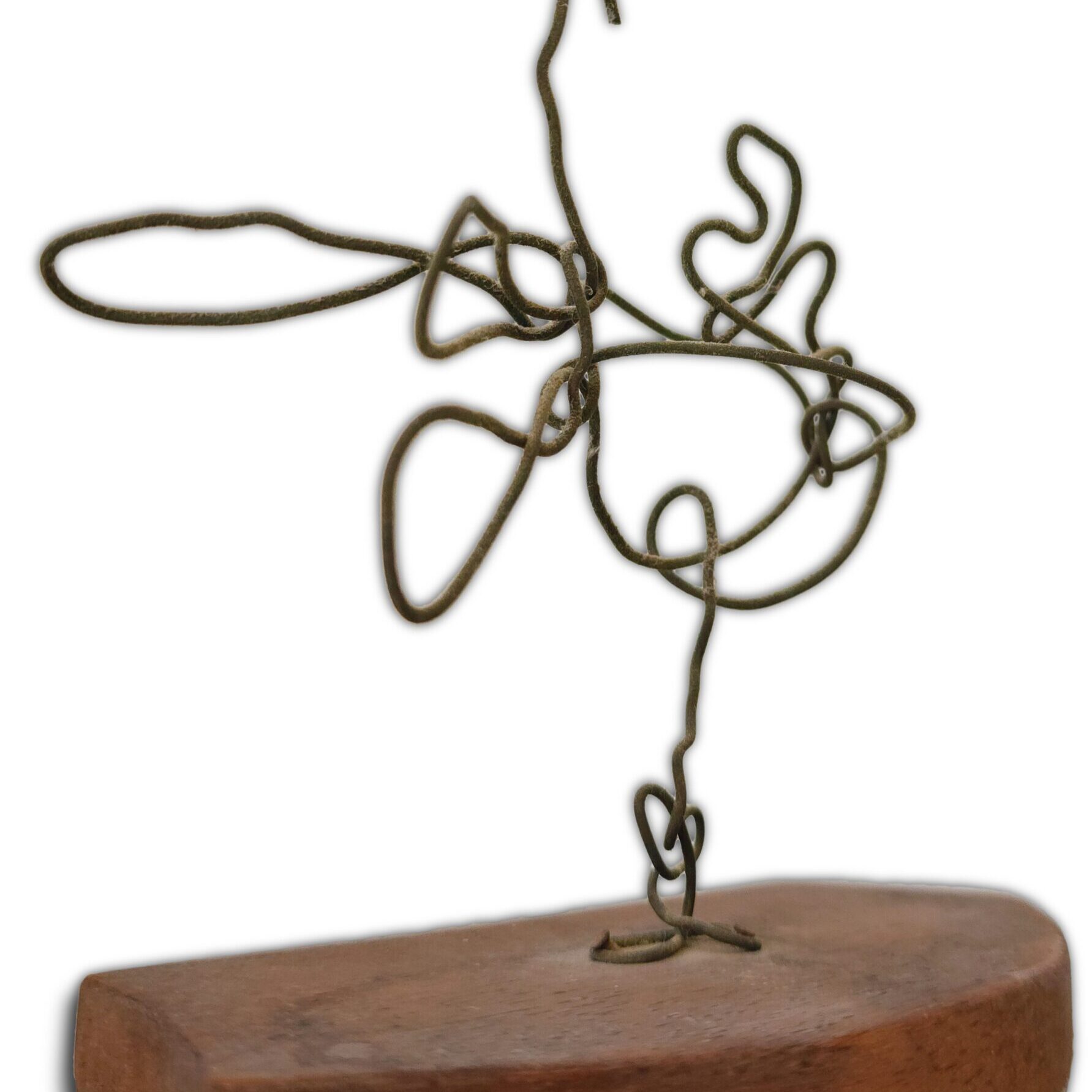
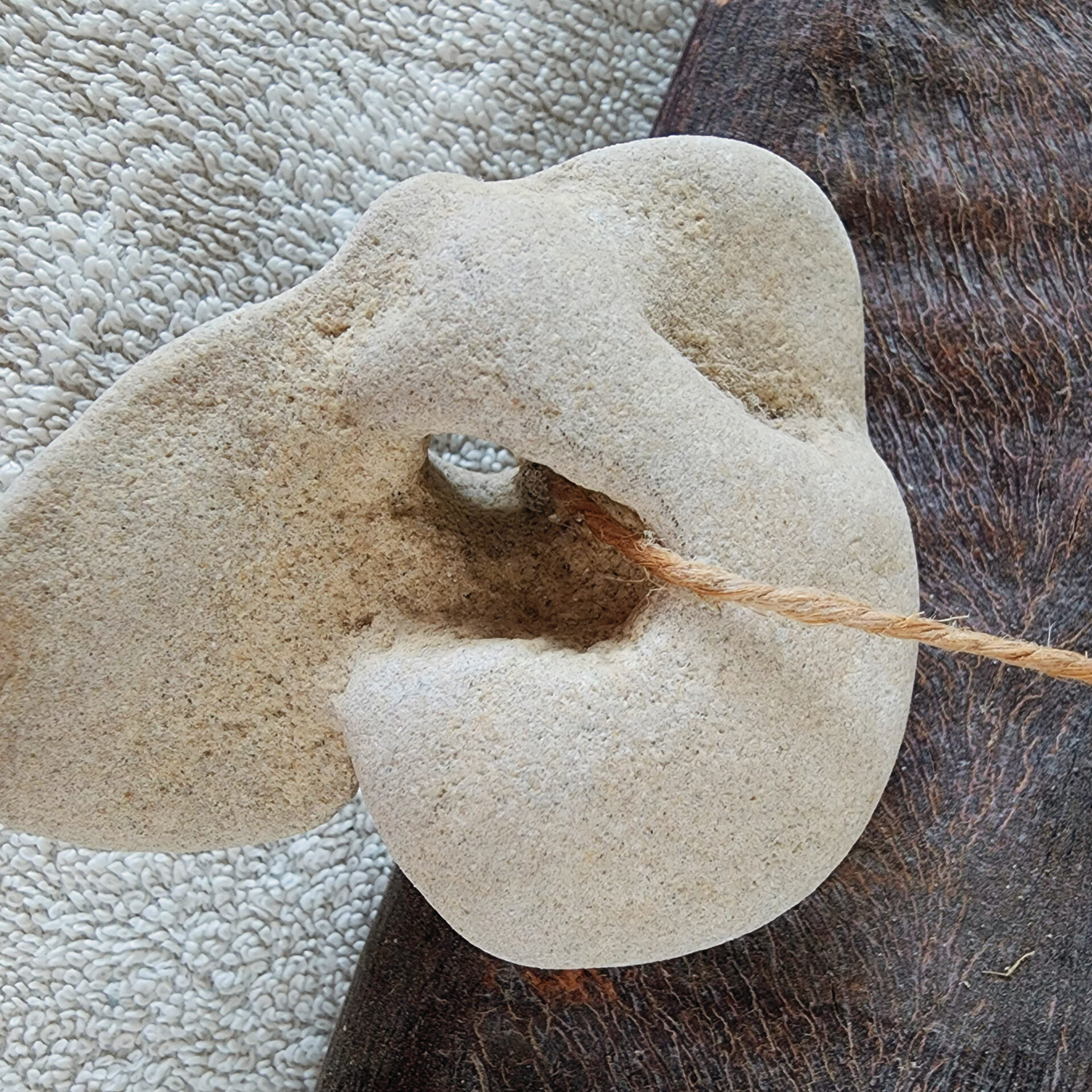
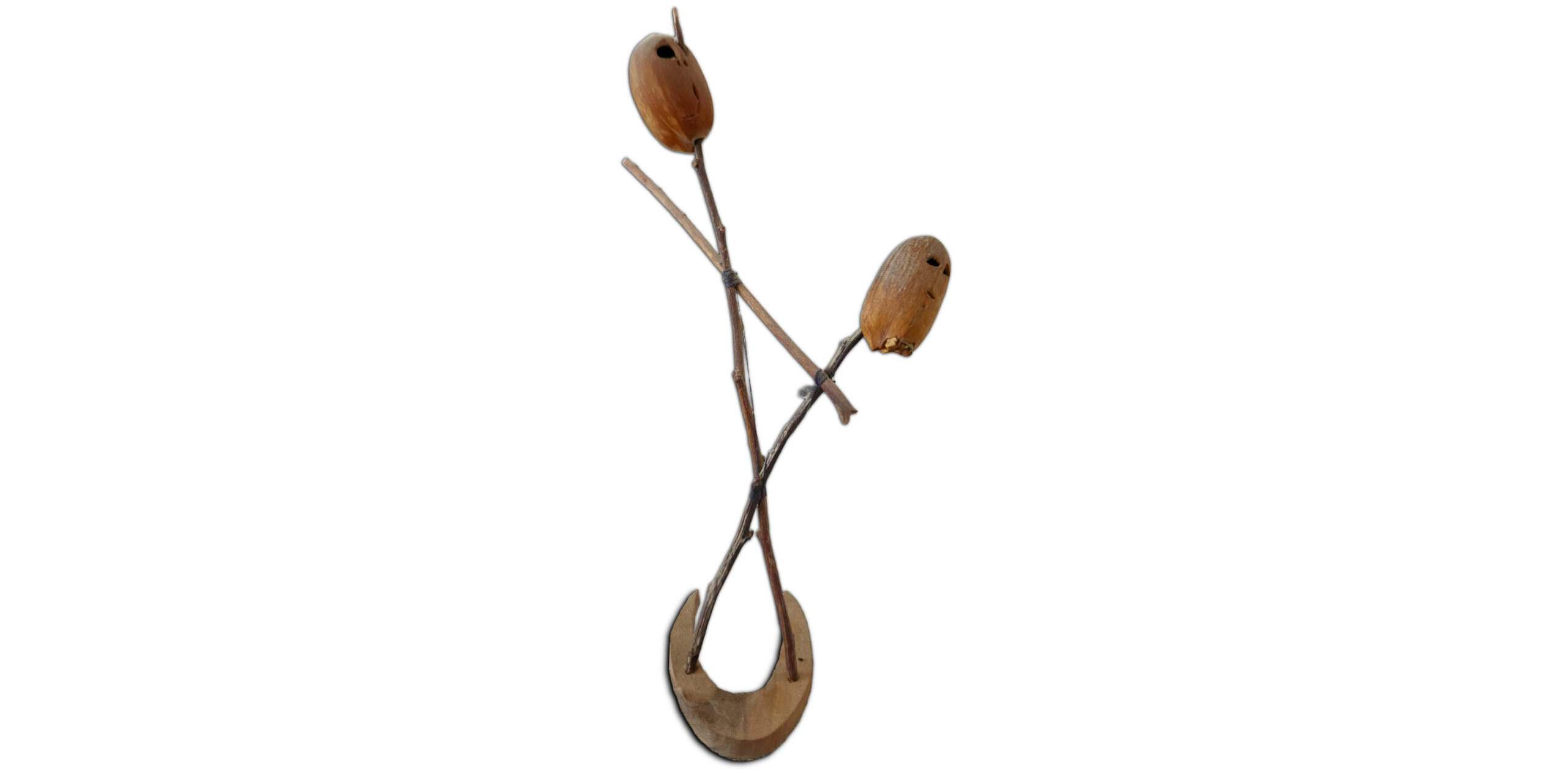
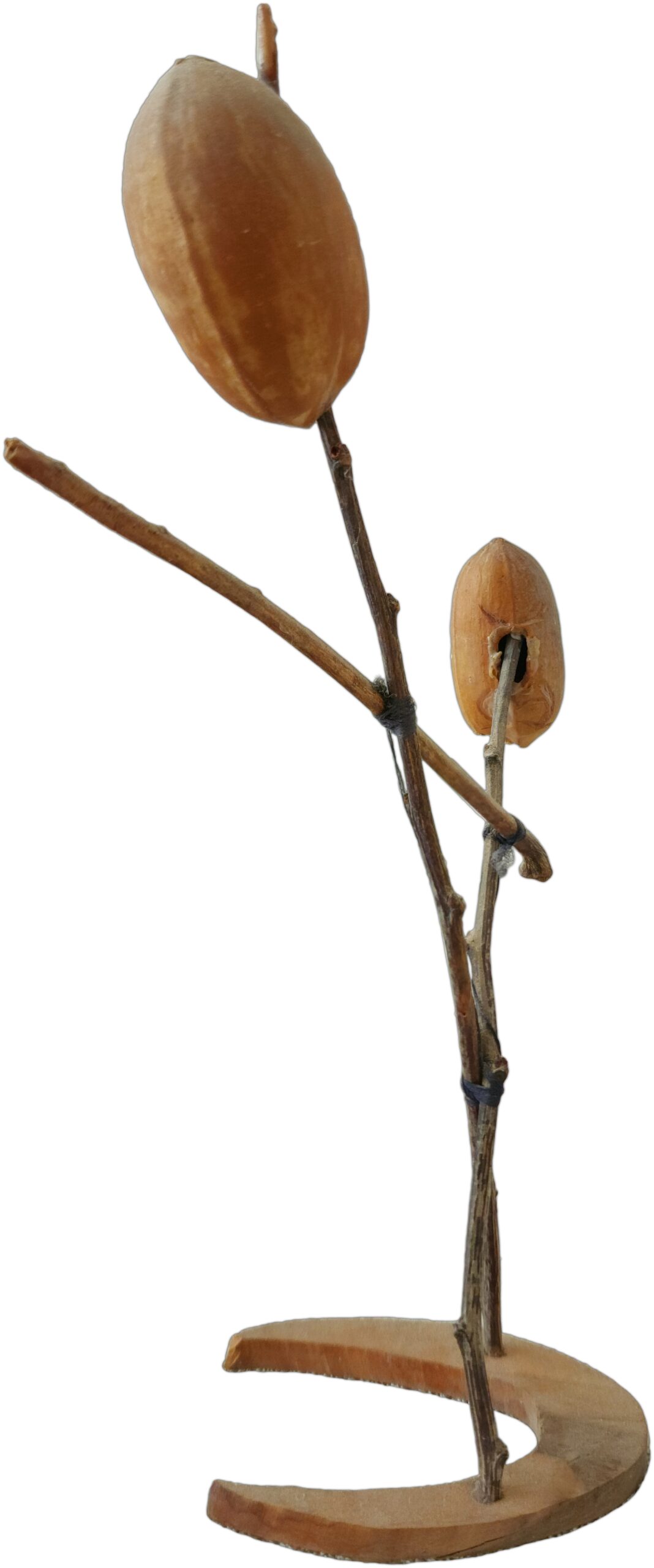
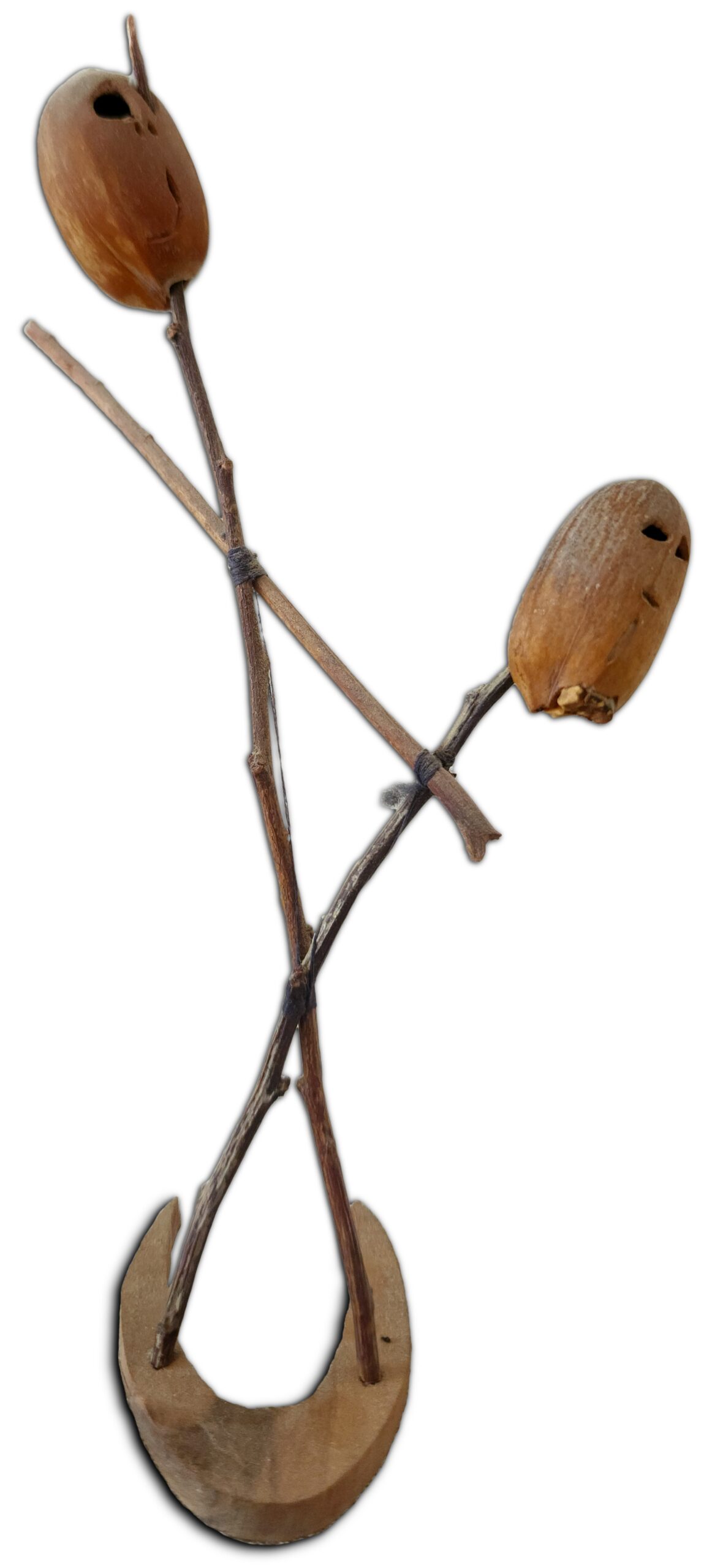
Collage: Nature Objects Bounded by Glue and Thread.
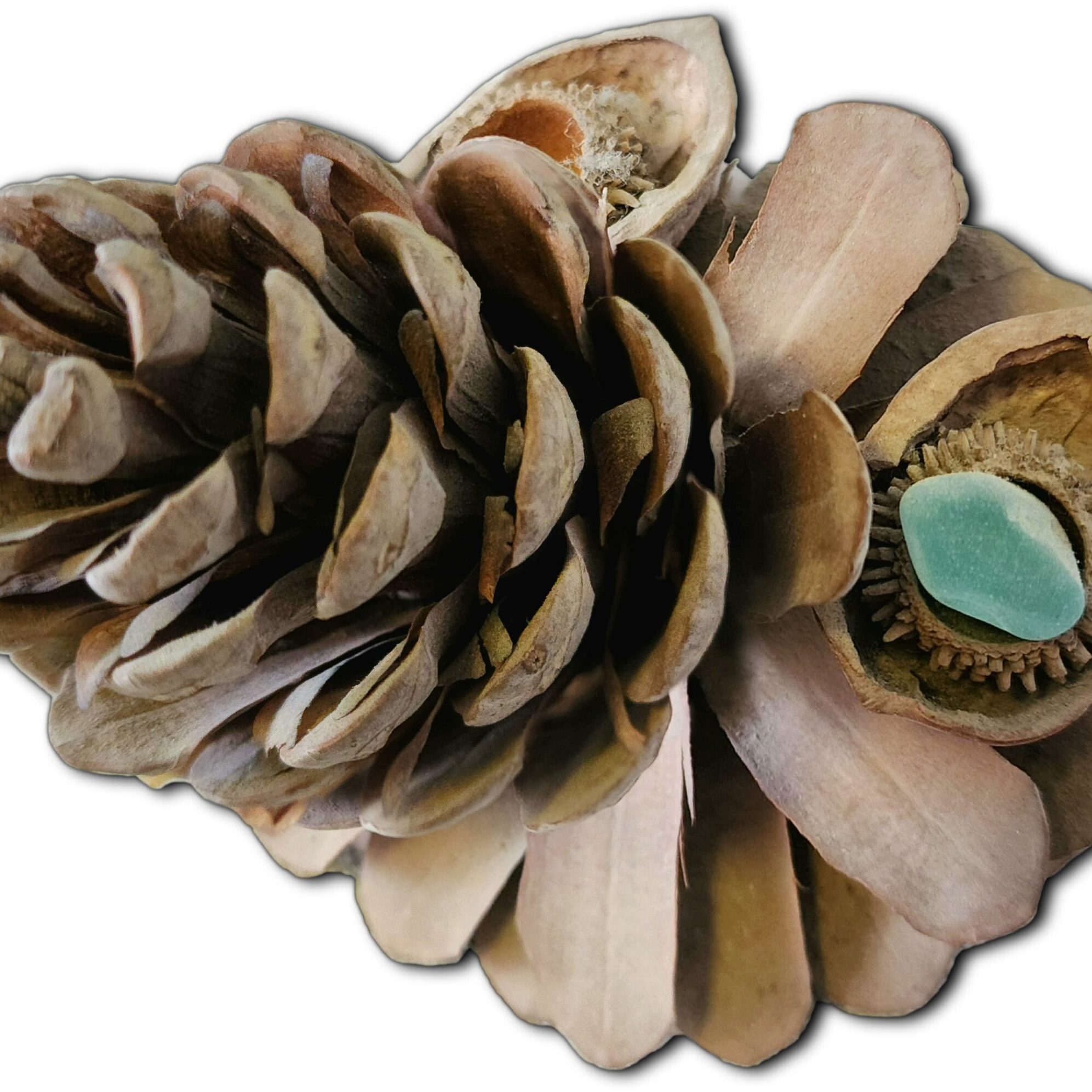
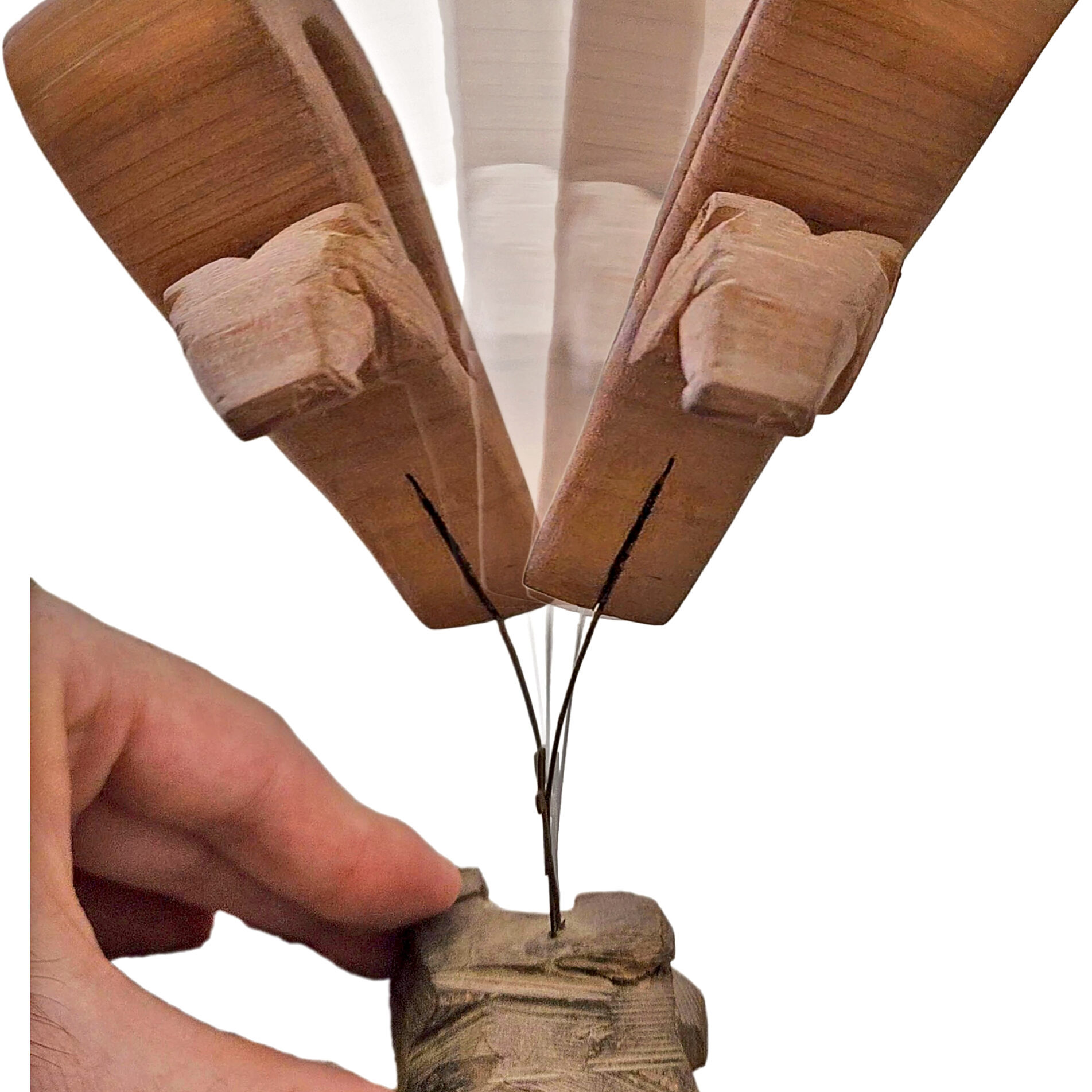
• Pecan Nuts: Cut with Sharp Knife.
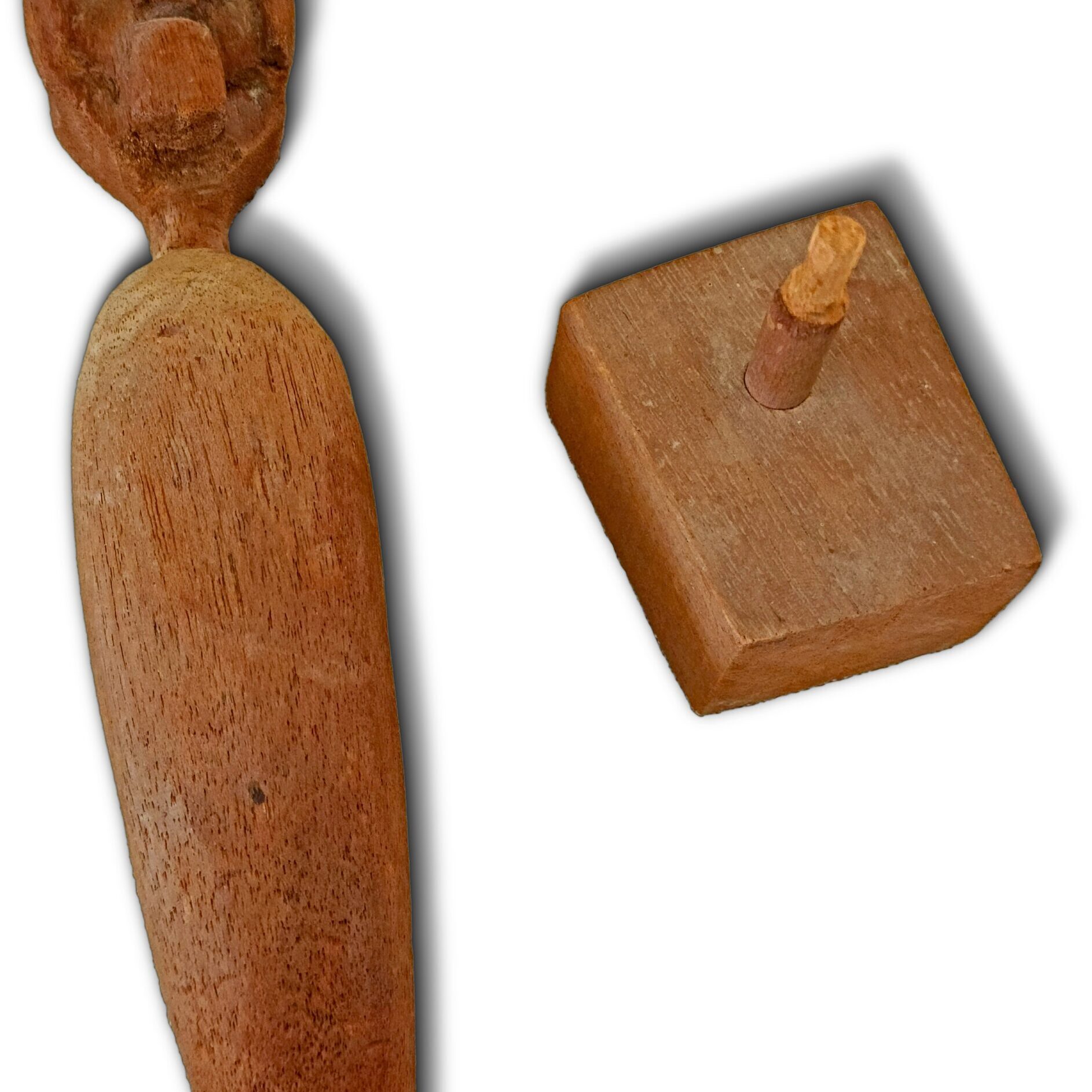
• Base: Planed Wood – Cut and Carved.
Style:
Naïve.
Dimensions:
10 × 20.5 × 2.9 cm.
The figures:
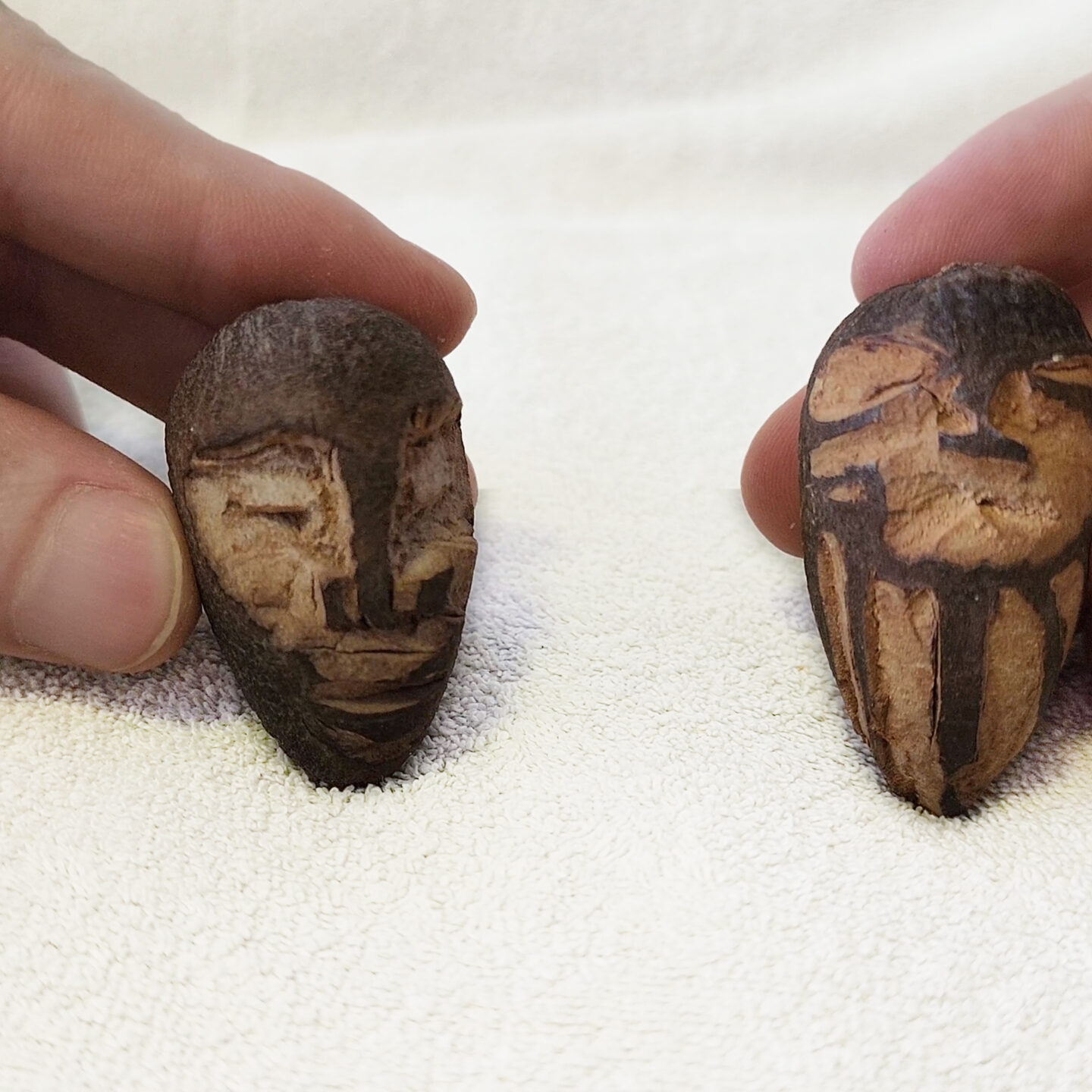
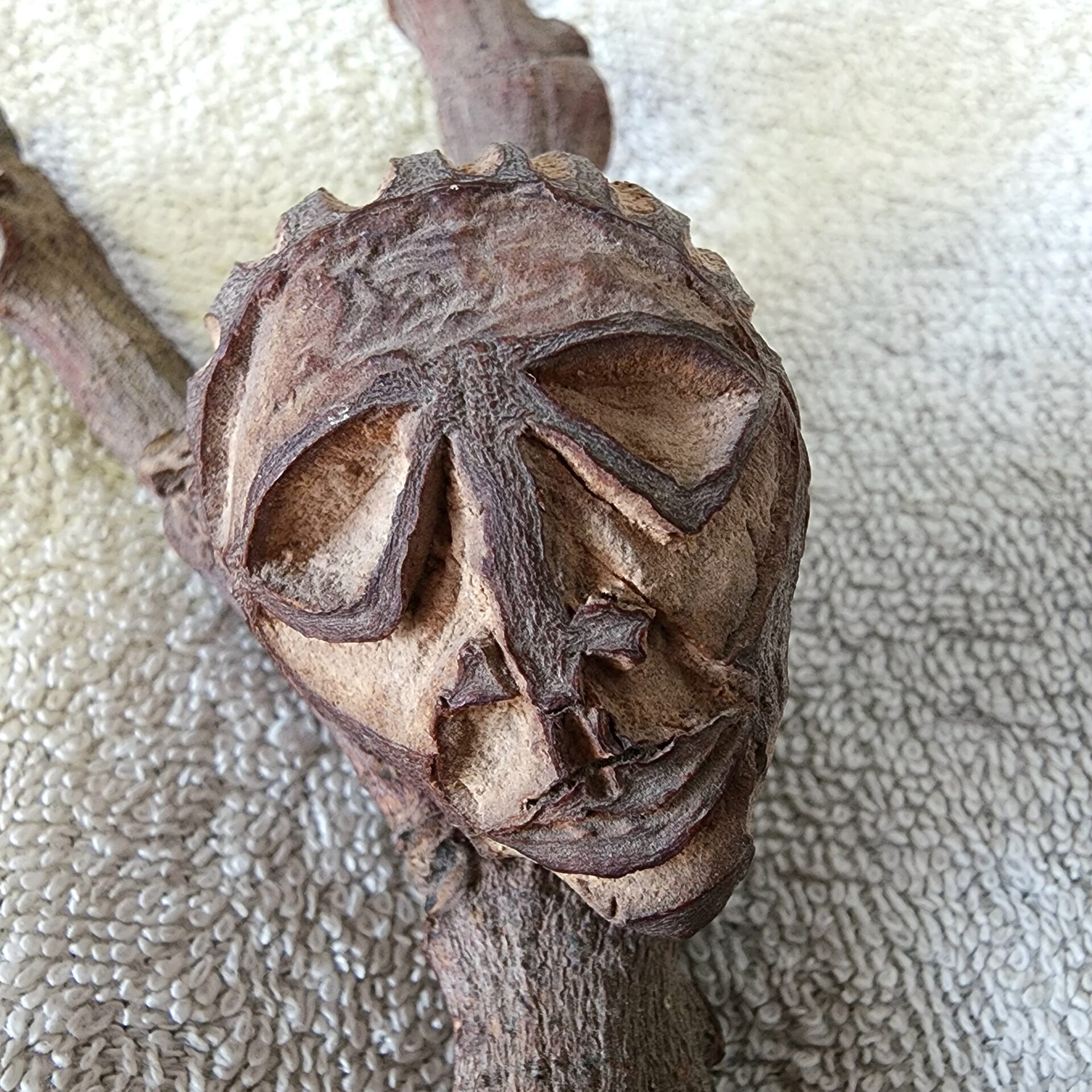
- Pecan nuts = the faces of the figures.
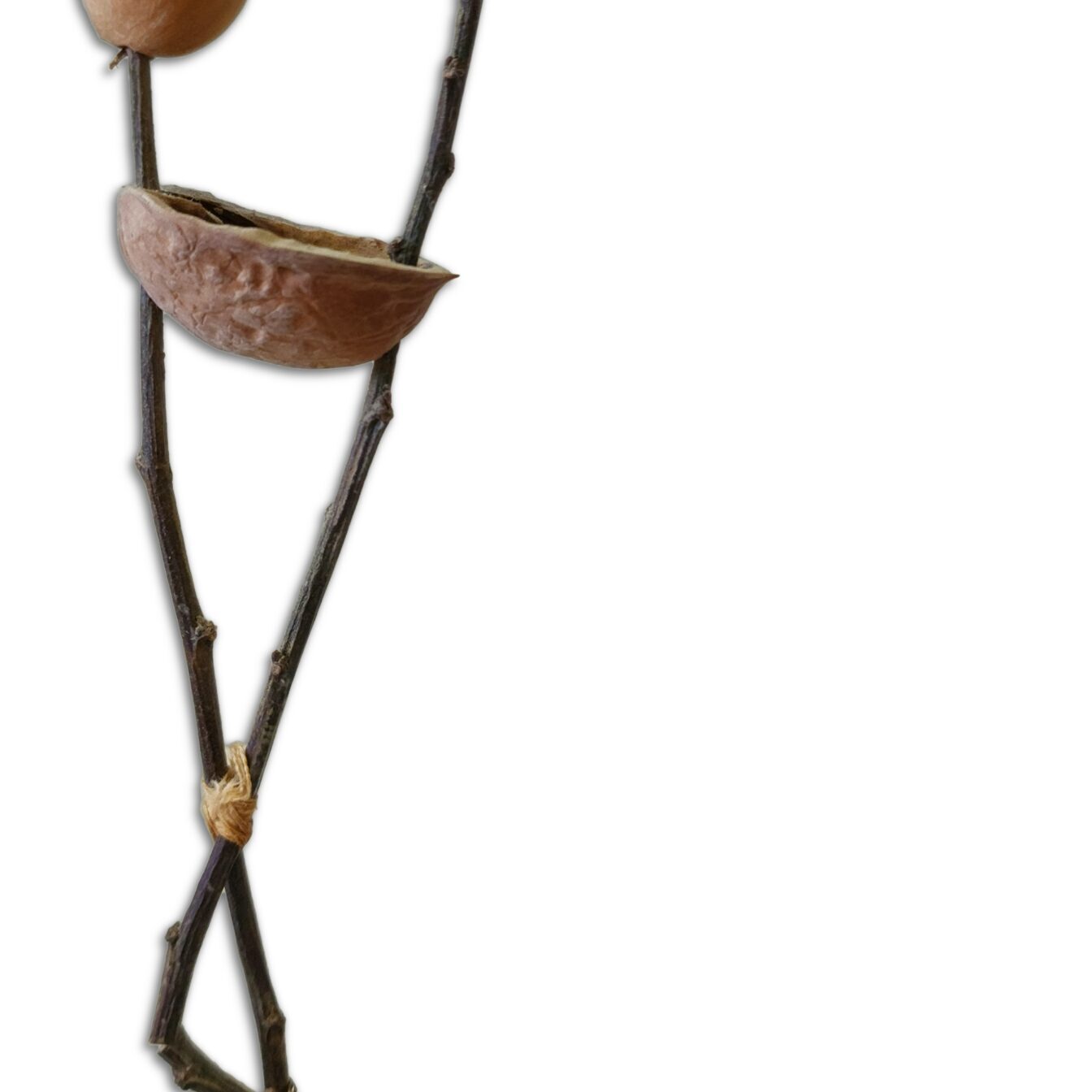
- Twigs = the legs and arms of the figures.
- Planed wood = the base (horseshoe shape).
History:
Belgium (as an empire or kingdom) ruled the Congo for many years (from 1885). This situation caused great tension between the Congolese people and the Belgian government. Later, Joseph Kasa-Vubu (alternatively Joseph Kasavubu) was born in 1915* and Patrice Lumumba (Patrice Émery Lumumba; born Isaïe Tasumbu Tawosa) in 1925. Both of them joined the struggle against Belgian rule. When Lumumba joined the Congolese National Movement (MNC), while Joseph joined the Alliance of Bakongo (ABAKO)**. Both were political movements for protest and resistance to foreign rule. Both eventually became leaders of the movement.
The resistance to foreign rule was constant and in January 1959 a large protest was organized that got out of control and caused hundreds of deaths. This eventually led the Belgians to move towards granting independence to the Congo (at a conference to address the issue, it was decided that the Congo would receive full independence on June 30, 1960).
After the election process, these two political movements received the most votes, with Lumumba’s party being the largest. Eventually, after a coalition-building race, Lumumba, then 34, was elected as the first Prime Minister of the Congo, while Joseph, then 44, was elected as the first President, following an agreement between the two to prevent a civil war (June 1960). This was a very delicate time when the Belgians wanted to remain involved and did not want to give up their huge economic profits from gold, copper and diamond mining. In addition, for the Americans, uranium mining in the Katanga province
was vital to the arms race against the Russians during the Cold War.
The Belgians, together with the American CIA, took advantage of the sensitive political situation and the cultural-tribal division in the country and tried to bring about Lumumba’s overthrow (his government began to deteriorate and power struggles began between Lumumba and Joseph). In September 1960, Joseph announced that Lumumba was being removed from office. About two weeks later, Colonel Mobutu Sese Seko, who was the Minister of Defense in the government, carried out a military coup and brought Joseph to power. This action greatly strengthened him politically and finally in 1965 he seized power with the support of Belgium and the CIA. He was also a member of the “MNC.”
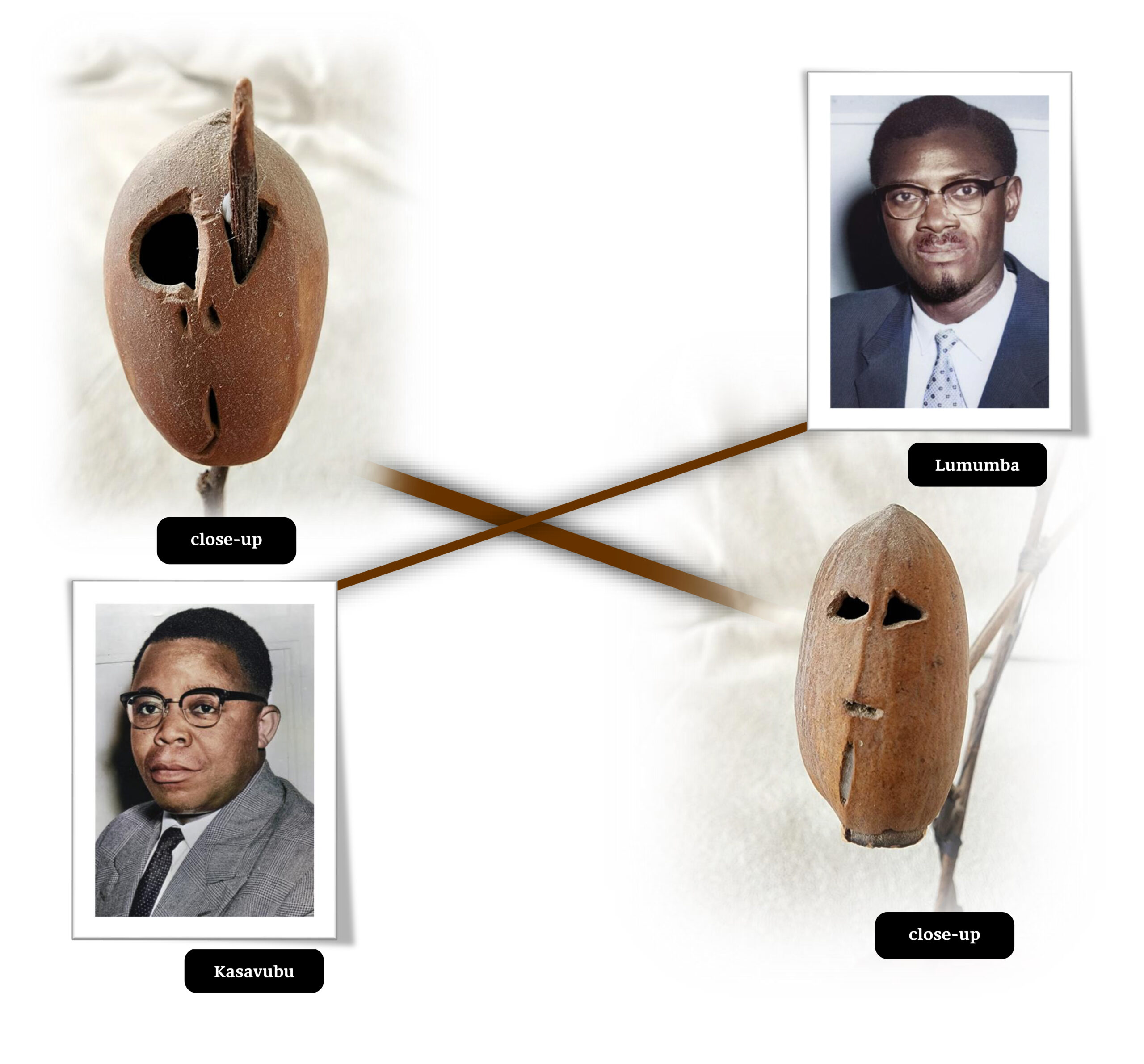
My composition with the 2 close-ups and the 2 figures (Images were enhanced and colorized by me on )
Horseshoe (like, Sickle):
The horseshoe is both a fitting for a horse and a shape. When used as a talisman, it is said to bring good luck, a symbol of peace, protection, a good future, and health (generally: good luck or “Mazal Tov” in Hebrew).
Summary:
In relation to the name that my father gave to the work (about these two figures) of “Lomumba & Kasabubu” (Hebrew: “לוֹמוּמְבָּה + קָזָבּוּבּוּ”) there is a slight distortion of language and hearing in relation to the true form (in French) in which their names should be pronounced – As shown on the title as “Lumumba and Kasavubu” (Hebrew: “לוּמוּמְבָּה וקָסַא־ווּבוּ [קָסַאווּבוּ]”). Apparently my father read an article about them in a newspaper or heard news and there they said and wrote them distortedly.
The two figures can be seen connected together at the waist (twigs meet in an X) and especially the horizontal twig that connects the two, which actually comes to represent them holding hands as a symbol of good relations. It can also be seen that the twigs at the point of connections (in the X’s) are not glued but tied, which simulates the close connection between the figures in terms of the historical story and in terms of the idea of maintaining peace and close relations. However, in reality the situation was completely different.
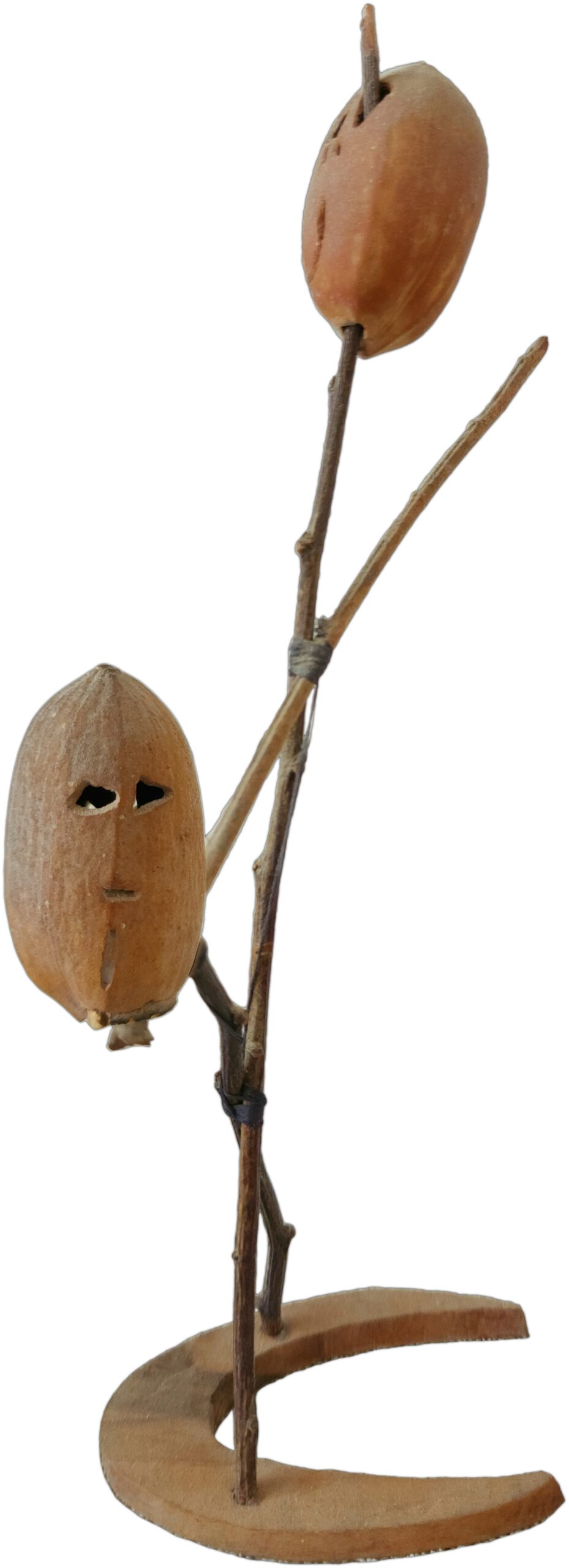
Front (or Right) View
Rear (or Left) View
Main View
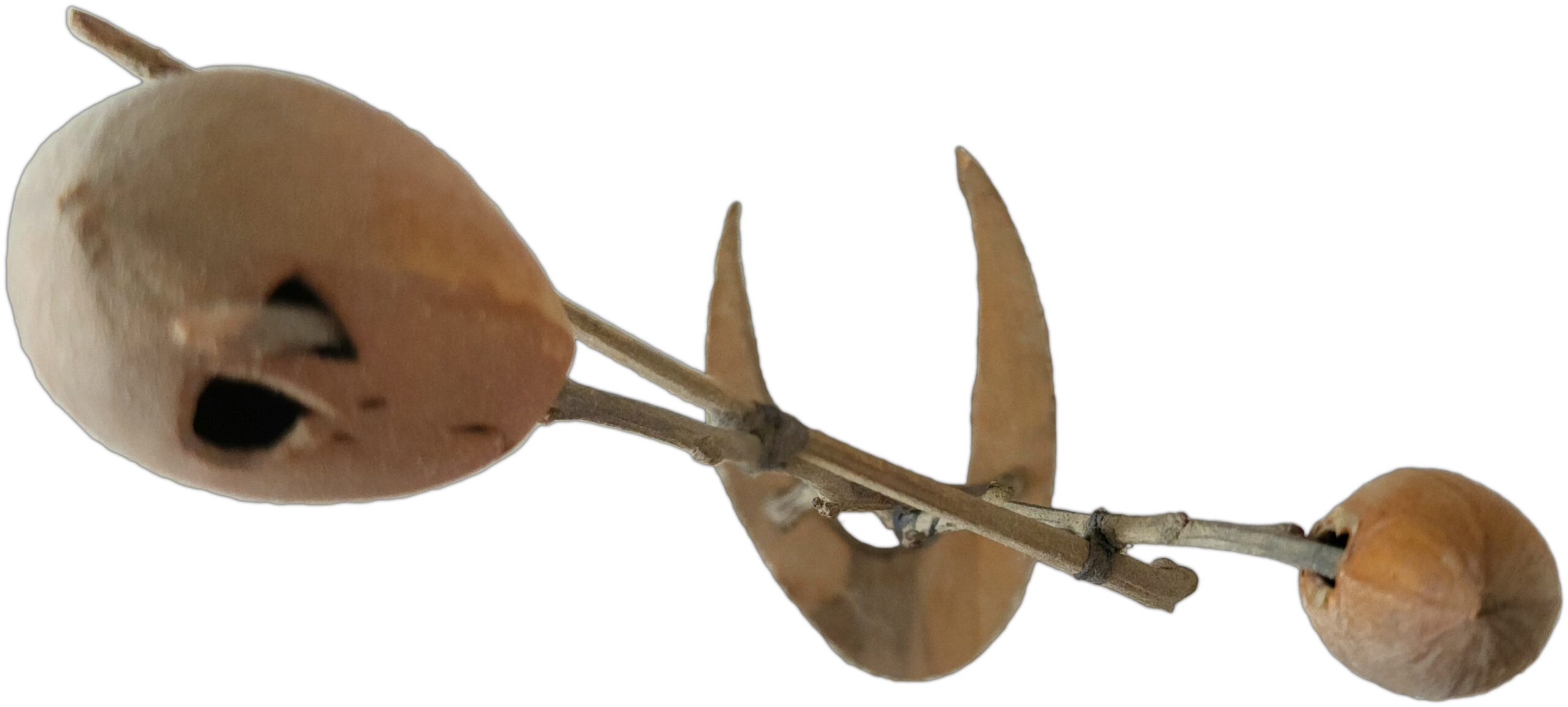
Upper View
Hebrew (Original) Name: לוּמוּמְבָּה וקָסַא־ווּבוּ
*
According to other sources: 1910, 1913, 1915 or 1917.
**
“Bakongo” It is a word in the Congolese language that means “Kongo people”, belonging to an ethnic group in Congo.