

Transcription:
* מתוך כתבה מאת איתי ורדי, קטע “חינוך” – מקומון “צומת השרון” 5.6.98 (עמוד 26)
מחקר מראה ששיטת הלחימה הסינית גו-ג’ו משפרת את השליטה העצמית של ילדים אלימים
בשיטת הגו-ג’ו מורידים נקודות על פגיעה ביריב ומלמדים את הלוחמים שככל שמוותרים יותר, כך היריב נחלש. במחקר בו לימדו ילדים את תורת הלחימה, הם שיפרו את יכולתם בלימודים והפסיקו להגיב באלימות
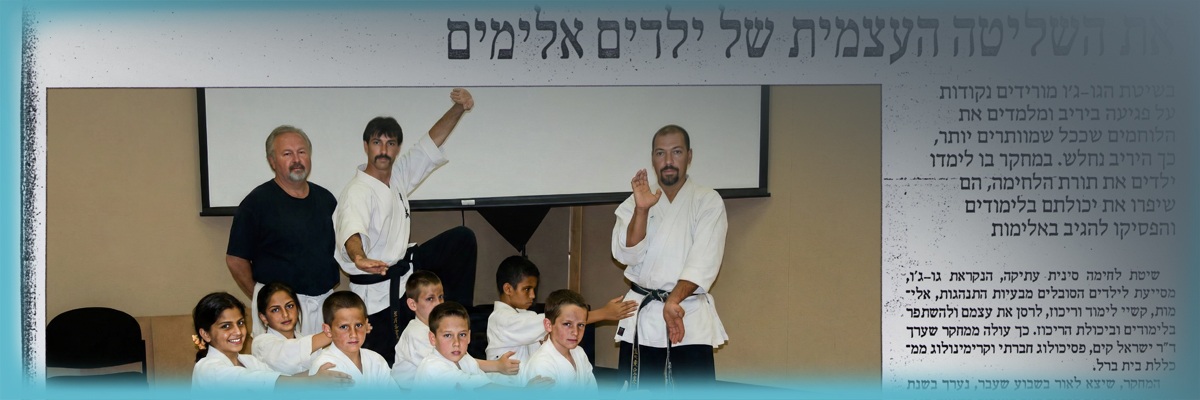
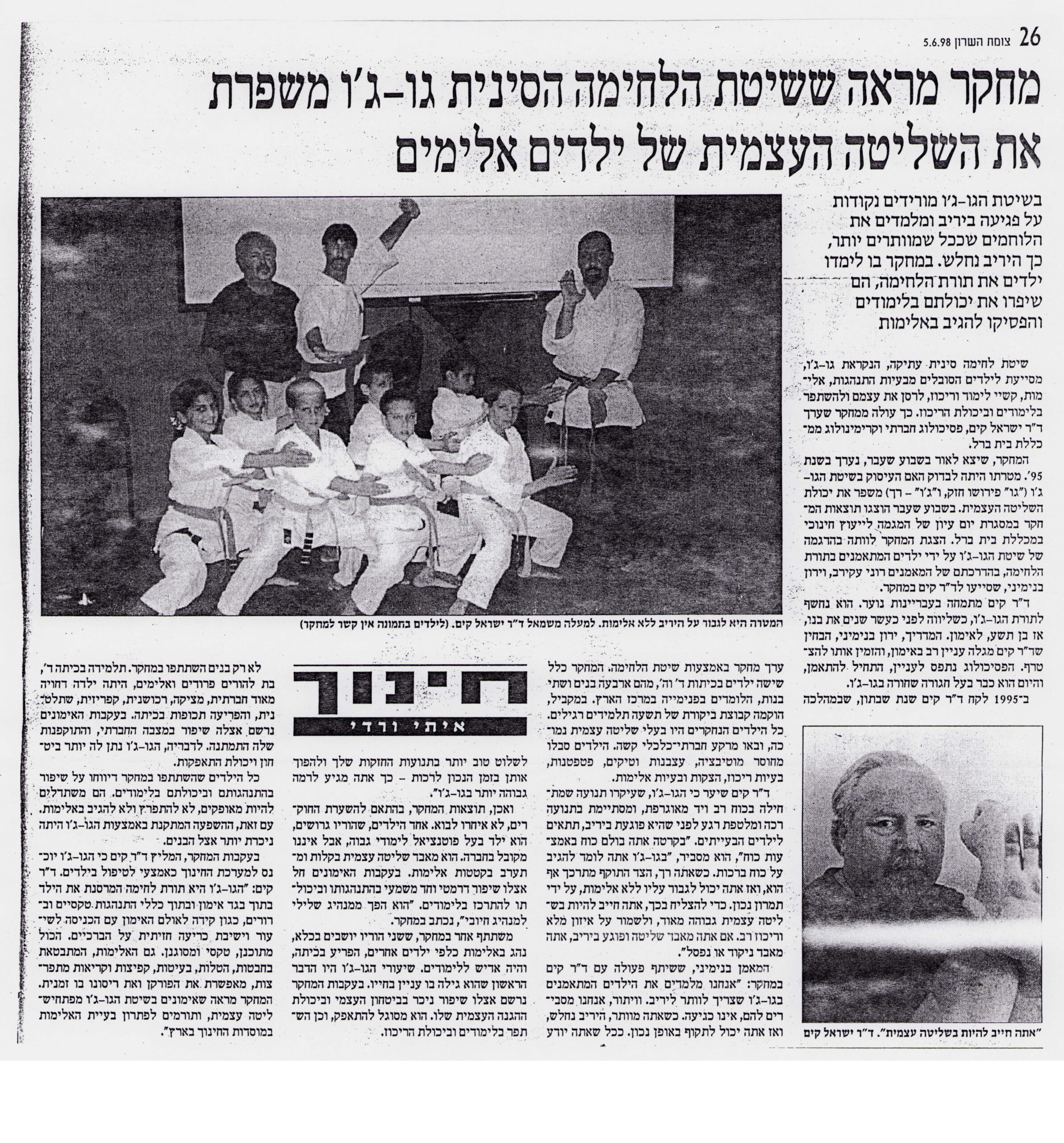
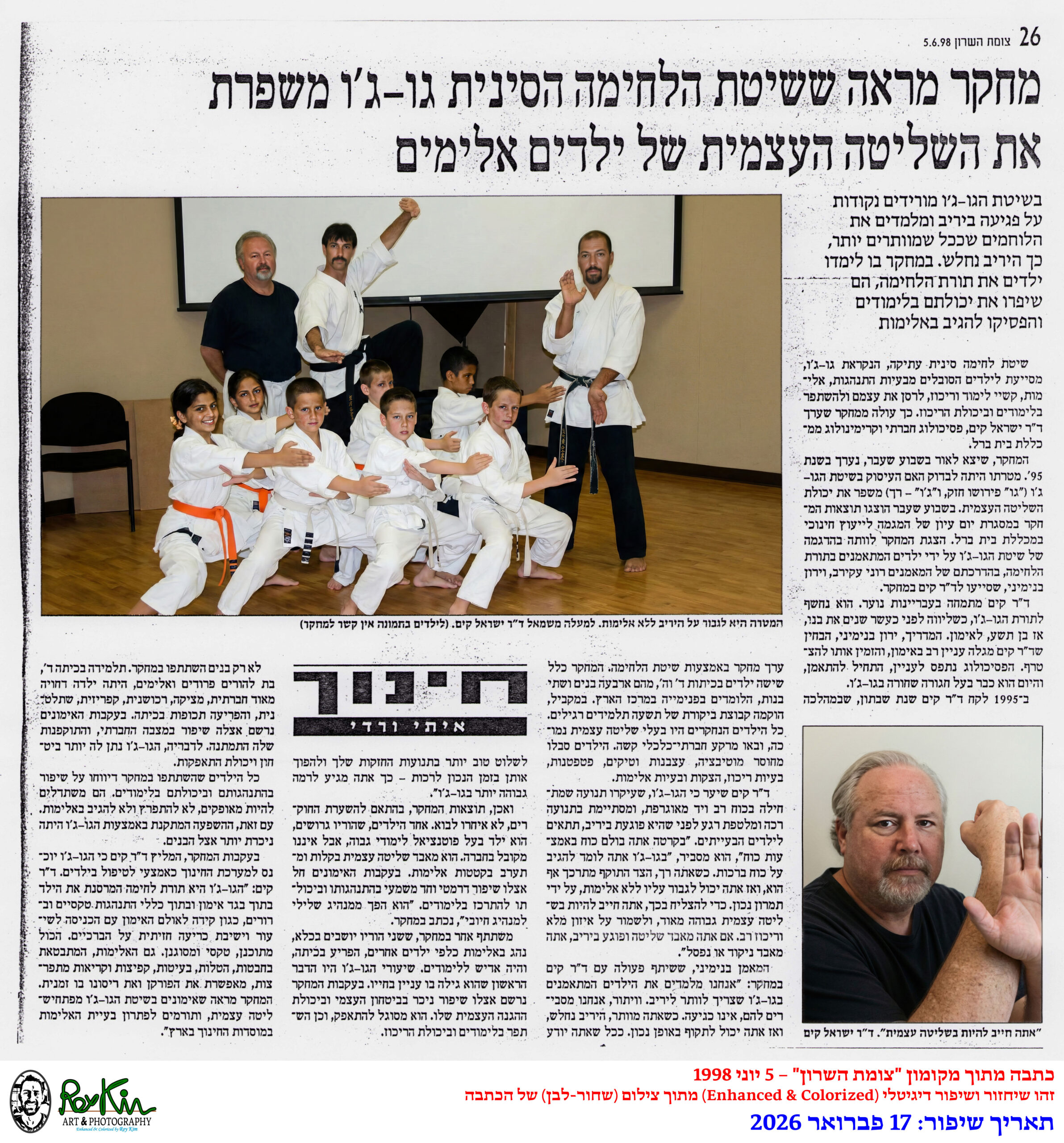
[כיתוב תמונה מרכזית]: המטרה היא לגבור על היריב ללא אלימות. למעלה משמאל ד”ר ישראל קים. (לילדים בתמונה אין קשר למחקר)
[כיתוב תמונה קטנה]: “אתה חייב להיות בשליטה עצמית”. ד”ר ישראל קים
שיטת לחימה סינית עתיקה, הנקראת גו-ג’ו, מסייעת לילדים הסובלים מבעיות התנהגות, אלימות, קשיי לימוד וריכוז, לרסן את עצמם ולהשתפר בלימודים וביכולת הריכוז. כך עולה ממחקר שערך ד”ר ישראל קים, פסיכולוג חברתי וקרימינולוג ממכללת בית ברל.
המחקר, שיצא לאור בשבוע שעבר, נערך בשנת 95′. מטרתו היתה לבדוק האם העיסוק בשיטת הגו-ג’ו (“גו” פירושו חזק, ו”ג’ו” – רך) משפר את יכולת השליטה העצמית. בשבוע שעבר הוצגו תוצאות המחקר במסגרת יום עיון של המגמה לייעוץ חינוכי במכללת בית ברל. הצגת המחקר לוותה בהדגמה של שיטת הגו-ג’ו על ידי ילדים המתאמנים בתורת הלחימה, בהדרכתם של המאמנים רוני עקירב, וירון בנימיני, שסייעו לד”ר קים במחקר.
ד”ר קים מתמחה בעבריינות נוער. הוא נחשף לתורת הגו-ג’ו, כשליווה לפני כעשר שנים את בנו, אז בן תשע, לאימון. המדריך, ירון בנימיני, הבחין שד”ר קים מגלה עניין רב באימון, והזמין אותו להצטרף. הפסיכולוג נתפס לעניין, התחיל להתאמן, והיום הוא כבר בעל חגורה שחורה בגו-ג’ו.
ב-1995 לקח ד”ר קים שנת שבתון, שבמהלכה ערך מחקר באמצעות שיטת הלחימה. המחקר כלל שישה ילדים בכיתות ד’ וה’, מהם ארבעה בנים ושתי בנות, הלומדים בפנימייה במרכז הארץ. במקביל, הוקמה קבוצת ביקורת של תשעה תלמידים רגילים. כל הילדים הנחקרים היו בעלי שליטה עצמית נמוכה, ובאו מרקע חברתי-כלכלי קשה. הילדים סבלו מחוסר מוטיבציה, עצבנות וטיקים, פטפטנות, בעיות ריכוז, הצקות ובעיות אלימות.
ד”ר קים שיער כי הגו-ג’ו, שעיקרו תנועה שמתחילה בכוח רב ויד מאוגרפת, ומסתיימת בתנועה רכה ומלטפת רגע לפני שהיא פוגעת ביריב, תתאים לילדים הבעייתיים. “בקרטה אתה בולם כוח באמצעות כוח”, הוא מסביר, “בגו-ג’ו אתה לומד להגיב על כוח ברכות. כשאתה רך, הצד התוקף מתרכך אף הוא, ואז אתה יכול לגבור עליו ללא אלימות, על ידי תמרון נכון. כדי להצליח בכך, אתה חייב להיות בשליטה עצמית גבוהה מאוד, ולשמור על איזון מלא וריכוז רב. אם אתה מאבד שליטה ופוגע ביריב, אתה מאבד ניקוד או נפסל”.
המאמן בנימיני, ששיתף פעולה עם ד”ר קים במחקר: “אנחנו מלמדים את הילדים המתאמנים בגו-ג’ו שצריך לוותר ליריב. וויתור, אנחנו מסבירים להם, אינו כניעה. כשאתה מוותר, היריב נחלש, ואז אתה יכול לתקוף באופן נכון. ככל שאתה יודע לשלוט טוב יותר בתנועות החזקות שלך ולהפוך אותן בזמן הנכון לרכות – כך אתה מגיע לרמה גבוהה יותר בגו-ג’ו”.
ואכן, תוצאות המחקר, בהתאם להשערת החוקרים, לא איחרו לבוא. אחד הילדים, שהוריו גרושים, הוא ילד בעל פוטנציאל לימודי גבוה, אבל איננו מקובל בחברה. הוא מאבד שליטה עצמית בקלות ומתערב בקטטות אלימות. בעקבות האימונים חל אצלו שיפור דרמטי וחד משמעי בהתנהגותו וביכולתו להתרכז בלימודים. “הוא הפך ממנהיג שלילי למנהיג חיובי”, נכתב במחקר.
משתתף אחר במחקר, ששני הוריו יושבים בכלא, נהג באלימות כלפי ילדים אחרים, הפריע בכיתה, והיה אדיש ללימודים. שיעורי הגו-ג’ו היו הדבר הראשון שהוא גילה בו עניין בחייו. בעקבות המחקר נרשם אצלו שיפור ניכר בביטחון העצמי וביכולת ההגנה העצמית שלו. הוא מסוגל להתאפק, וכן השתפר בלימודים וביכולת הריכוז.
לא רק בנים השתתפו במחקר. תלמידה בכיתה ד’, בת להורים פרודים ואלימים, היתה ילדה דחויה מאוד חברתית, מציקה, רכושנית, קפריזית, שתלטנית, והפריעה תכופות בכיתה. בעקבות האימונים נרשם אצלה שיפור במצבה החברתי, והתוקפנות שלה התמתנה. לדבריה, הגו-ג’ו נתן לה יותר ביטחון ויכולת התאפקות.
כל הילדים שהשתתפו במחקר דיווחו על שיפור בהתנהגותם וביכולתם בלימודים. הם משתדלים להיות מאופקים, לא להתפרץ ולא להגיב באלימות. עם זאת, ההשפעה המתקנת באמצעות הגו-ג’ו היתה ניכרת יותר אצל הבנים.
בעקבות המחקר, ממליץ ד”ר קים כי הגו-ג’ו יוכנס למערכת החינוך כאמצעי לטיפול בילדים. ד”ר קים: “הגו-ג’ו היא תורת לחימה המרסנת את הילד בתוך בגד אימון ובתוך כללי התנהגות טקסיים וברורים, כגון קידה לאולם האימון עם הכניסה לשיעור וישיבת כריעה חזיתית על הברכיים. הכול מתוכנן, טקסי ומסוגנן. גם האלימות, המתבטאת בחבטות, הטלות, בעיטות, קפיצות וקריאות מתפרצות, מאפשרת את הפורקן ואת ריסונו בו זמנית. המחקר מראה שאימונים בשיטת הגו-ג’ו מפתחים שליטה עצמית, ותורמים לפתרון בעיית האלימות במוסדות החינוך בארץ”.
English Translation:
* From an article by Itai Vardi, section “Education” – from the “Tzomet HaSharon” local newspaper, June 5, 1998 (page 26)
Research Shows that the Chinese Martial Art Go-Ju Improves the Self-Control of Violent Children
In the Go-Ju method, points are deducted for hurting an opponent, and fighters are taught that the more they yield, the weaker the opponent becomes. In a study where children were taught the martial art, they improved their academic abilities and stopped reacting with violence
[Main Image Caption]: The goal is to overcome the opponent without violence. Top left is Dr. Israel Kim. (The children in the picture have no connection to the study.)
[Small Image Caption]: “You must be in self-control.” Dr. Israel Kim.
An ancient Chinese martial art, called Go-Ju, helps children suffering from behavioral problems, violence, and difficulties with learning and concentration, to restrain themselves and improve in their studies and concentration abilities. This emerges from a study conducted by Dr. Israel Kim, a social psychologist and criminologist from Beit Berl College.
The study, published last week, was conducted in ’95. Its purpose was to examine whether practicing the Go-Ju method (“Go” means hard, and “Ju” means soft) improves the capacity for self-control. Last week, the study’s results were presented at a seminar for the Educational Counseling Department at Beit Berl College. The presentation of the study was accompanied by a demonstration of the Go-Ju method by children training in the martial art, under the guidance of coaches Roni Akirav and Yaron Binyamini, who assisted Dr. Kim in the research.
Dr. Kim specializes in juvenile delinquency. He was exposed to the teachings of Go-Ju when he accompanied his then nine-year-old son to training about ten years ago. The instructor, Yaron Binyamini, noticed that Dr. Kim showed great interest in the training and invited him to join. The psychologist was captivated by the subject, started training, and today he already holds a black belt in Go-Ju.
In 1995, Dr. Kim took a sabbatical year, during which he conducted research using the martial art. The study included six children in grades 4 and 5—four boys and two girls—studying at a boarding school in central Israel. Simultaneously, a control group of nine regular students was established. All the researched children had low self-control and came from a difficult socio-economic background. The children suffered from a lack of motivation, nervousness and tics, talkativeness, concentration problems, harassment, and violent behaviors.
Dr. Kim hypothesized that Go-Ju, whose essence is a movement that starts with great force and a clenched fist, and ends in a soft and caressing movement right before it hits the opponent, would suit the problematic children. “In Karate, you block force with force,” he explains, “in Go-Ju, you learn to react to force with softness. When you are soft, the attacking side also softens, and then you can overcome them without violence, through proper maneuvering. To succeed in this, you must be in very high self-control, and maintain full balance and great concentration. If you lose control and hit the opponent, you lose points or are disqualified.”
Coach Binyamini, who collaborated with Dr. Kim on the study, noted: “We teach the children training in Go-Ju that they need to yield to the opponent. Yielding, we explain to them, is not surrendering. When you yield, the opponent weakens, and then you can attack properly. The more you know how to better control your strong movements and turn them into softness at the right time—the higher the level you reach in Go-Ju.”
Indeed, the research results, in accordance with the researchers’ hypothesis, were not late in coming. One of the children, whose parents are divorced, is a child with high academic potential but is not socially accepted. He easily loses self-control and gets involved in violent brawls. Following the training, there was a dramatic and unequivocal improvement in his behavior and his ability to concentrate on his studies. “He turned from a negative leader into a positive leader,” the study noted.
Another participant in the study, whose parents are both in prison, behaved violently towards other children, disrupted the class, and was indifferent to his studies. The Go-Ju classes were the first thing he found interesting in his life. Following the study, a significant improvement was noted in his self-confidence and his self-defense ability. He is able to restrain himself, and also improved in his studies and concentration ability.
Not only boys participated in the study. A 4th-grade student, the daughter of separated and violent parents, was a very socially rejected child—bothersome, possessive, capricious, domineering, and frequently disrupted the class. Following the training, an improvement was noted in her social situation, and her aggressiveness moderated. According to her, Go-Ju gave her more confidence and the ability to restrain herself.
All the children who participated in the study reported an improvement in their behavior and their academic abilities. They try to be restrained, not to erupt, and not to react with violence. However, the corrective effect through Go-Ju was more evident among the boys.
Following the study, Dr. Kim recommends that Go-Ju be introduced into the education system as a means of treating children. Dr. Kim: “Go-Ju is a martial art that restrains the child inside a training uniform and within ceremonial and clear rules of behavior, such as bowing to the training hall upon entering the class and sitting kneeling frontally on the knees. Everything is planned, ceremonial, and stylized. Even the violence, expressed in punches, throws, kicks, jumps, and explosive shouts, allows for venting and its restraint simultaneously. The research shows that Go-Ju training develops self-control, and contributes to solving the problem of violence in educational institutions in Israel.”